



















































































































These presentations provided a wealth of data suggesting that very early treatment of HIV may help control viremia and achieve remission over time in pediatric patients.
These presentations provided a wealth of data suggesting that very early treatment of HIV may help control viremia and achieve remission over time in pediatric patients.
Here: 4 subgroups of HIV patients whose cardiovascular health might benefit from your targeted intervention.
Useful details here about HIV and age-related issues, sexual dysfunction, heart disease, and end-organ damage.
These suggestions will enhance your enjoyment of long meetings and will have your colleagues remarking on what a jolly, friendly person you really are. Ignore the advice at your own peril.
The good: this premier HIV conference offers a banquet of exceptional material. The bad: the expense and the grind of covering a meeting this rich-and lengthy.
Two studies demonstrate that raltegravir is an extremely well-tolerated and potent component of a combination antiretroviral regimen.
Replication of HIV within the CNS continues to be a hot topic, because it represents a viral reservoir that can complicate treatment, as well as control and prevention efforts.
“Super-spreaders” continue to play a major role in various epidemics, including tuberculosis and HIV infection.
Preliminary study results confirm that patient education and targeting those in higher-risk populations or who engage in high-risk behaviors continue to be important in preventing HIV transmission. Four specific recommendations here.
It is quite likely that we have entered a new era of treatment for individuals either mono-infected with HCV or co-infected with HCV/HIV. Details here.
The START trial is likely to provide a definitive answer to one of the most important clinical questions in HIV management: when is the optimal time to start antiretroviral therapy.
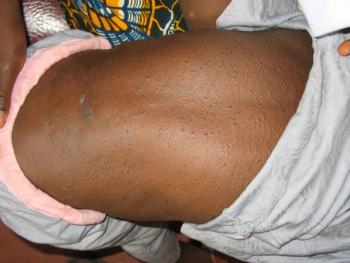
Better understanding of this complex condition can lead to better patient care and prevention. This week’s photo quiz offers several presentations to test your knowledge.
Stark defunding for AIDS research may lead to increased pharmaceutical influence, less population diversity in research, and dwindling new HIV-specific advances.
Hepatocellular carcinoma can develop in HIV/HCV-coinfected patients with a previous sustained virological response with interferon-based therapy. Continued surveillance for HCC with ultrasound examinations in patients with cirrhosis who respond to anti-HCV therapy is recommended.
Incomplete adherence with anti-retroviral therapy can be associated with higher levels of residual HIV-1 viremia, according to a new study. Details here.
People with HIV infection are at high risk for invasive meningococcal disease. Current guidelines do not recommend vaccination against meningococcal disease for patients with HIV infection, but these patients can choose to be vaccinated.
Nondisclosure of HIV status is behavior with powerful implications for clinical trial enrollment. Could it happen in clinical care? Do we need to be wary? The question remains open.
A new retrospective analysis looks at the incidence of infection with common scourge Clostridium difficile in the specific context of HIV infection.
A classic sign helps determine the diagnosis. Do you recognize it?
Helios is 80 years old and was given a diagnosis of HIV infection in 1994. He's still taking the same combination of work-horse antiretrovirals he started with. I wanted to talk about changes. Helios didn't.
Cancer survivors have no consensus guidelines that outline optimal ongoing monitoring, prevention, or wellness strategies. In that absence, ASCO advocates a shared-care model for primary care physicians and oncologists.
Patients coinfected with hepatitis C virus (HCV) and HIV can develop rapidly progressive liver fibrosis.
First of all, it is important to know what exactly is meant by “the best.”
Discitis, a bacterial infection within the vertebral disc, typically results from seeding during an episode of bacteremia.
A 46-year-old man with a history of HIV infection presents to the emergency department for left flank pain. A lateral x-ray film of the patient’s lumbar spine is shown. What is the diagnosis?