

























































































































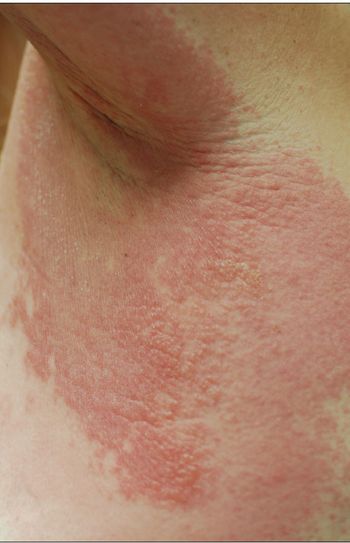
For 2 months, a 60-year-old man has had this pruritic eruption on his arms, legs, and trunk. It is itchy enough at times to interfere with his sleep. He has taken the same antihypertensive medication for more than a year.
For 2 months, a 60-year-old man has had this pruritic eruption on his arms, legs, and trunk. It is itchy enough at times to interfere with his sleep. He has taken the same antihypertensive medication for more than a year.

Fluoroquinolone antibiotics have activity against a wide range of gram-positive, gramnegative, and atypical bacteria.
In an effort to make the twain of east and west meet through air travel, we take off to distant sites for either vacation or business. Whether the destination is eastward to Europe or westward to Hawaii, afterward there is one devil to pay: jet lag.
Lecturing around the country has left us with the powerful impression that both primary care physicians and psychiatrists are hungry for new ways to think about and manage depression and the myriad symptoms and syndromes with which it is associated-including attention-deficit disorder, insomnia, chronic pain conditions, substance abuse, and various states of disabling anxiety.
Sometimes we try to distill long experience into words, whether aphorisms or full paragraphs. Rilke’s wonderful prose poem expresses this very well in the part that begins, “For the sake of a single verse, one must see many cities, men and things. . . . ” While medicine has only some features in common with poetry, what reverberates is the wish to impart an affecting draught of beauty or wisdom or insight, in the case of poetry, after many years and decades of immersion in life; and I here offer some fruits of long observation and participation “hip deep” in clinical care and in the teaching of residents.
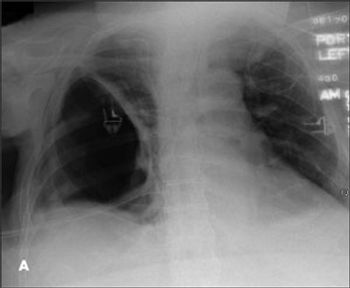
For 3 months, a 63-year-old man had experienced progressively worsening dyspnea. He denied fever, weight loss, and hemoptysis. Eight months earlier, he had had a right thoracotomy to drain a right empyema. Comorbidities included morbid obesity, type 2 diabetes mellitus, hypertension, and obstructive sleep apnea. However, he did not have any intrinsic lung disease.
It can be difficult to regulate the output of a cryotherapy gun-and the extent of freezing that results. Using a disposable ear speculum to direct the spray helps ensure that the liquid nitrogen hits only the wart or other lesion. Bear in mind that the speculum can get very cold when used in this way; holding it with some gauze helps.
I recommend having a “diabetes stamp” made up that includes in its imprint fasting blood glucose, low-density lipoprotein cholesterol, hemoglobin A1c, urine microalbumin, ECG, eye examination, podiatric examination, flu shot, and pneumococcal vaccine-along with lines on which to write dates and results.
The next time a patient’s insomnia fails to improve despite counseling about smoking and use of coffee, tea, and other stimulants, ask that he or she remove the television set from the bedroom. Or recommend that the television be turned off at a certain time every night so that a sleep pattern can be established. You may be surprised at the results!
Sleep disorders are common in persons older than 70 years, according to a large community-based study of age-related diseases and cognitive functioning. The most common disorder, sleep-related leg cramps, occurred in 32% of the study participants, according to investigator Jennifer Molano, MD, a behavioral neurology fellow at the Mayo Clinic in Rochester, Minnesota.
Anxiety disorders are as prevalent and disabling as depression; they affect about 19.1 million adults in the United States at some point during their lifetimes.1-3 Because of the high suicide risk associated with depression, patients who have anxiety may attract less attention from their primary care providers. Thus, anxiety disorders often go undiagnosed and untreated.
Premenstrual disorders affect many women in the United States. These disorders range in severity from the mild, bothersome symptoms that occur in more than 75% of women with regular menstrual cycles, to premenstrual syndrome (PMS) and, finally, to the most severe and disabling, premenstrual dysphoric disorder (PMDD). Nearly 5 million American women have PMDD.
In the past 15 years, there has been an increasing awareness of the syndromal persistence of attention-deficit/ hyperactivity disorder (ADHD) into adulthood.
It can be difficult to determine whether unusual, paroxysmal behavior represents a seizure or a nonepileptic event. Patients with sudden flailing movements or unresponsive staring may, in fact, be experiencing psychogenic events. Other types of pathological spells, such as syncope and migraine, can also be mistaken for epileptic seizures.
A 25-year-old woman presents for a prenatal visit. She has an unremarkable medical history except for hypermobility of the joints and a tendency to bruise easily. Her mother and sister also have very lax joints.
My patient is a middle-aged white man who has had an itchy rash on his upper body for the past 16 months. It consists of red raised bumps and resembles “prickly heat.”
The numerous symptom domains of fibromyalgia syndrome (FMS) include pain, fatigue, sleep disturbance, mood disturbance, function impairment, irritable bowel syndrome, tension and migraine headache, and cognitive dysfunction. Its pathophysiology is rooted in neural dysregulation in the spinal cord and brain.
Establishing the cause of chronic pain is crucial because treatment based on the mechanism of the pain is most likely to be successful.
Pain is a significant public health concern. In a prevalence study conducted in Australia, 17% of men and 20% of women reported chronic daily pain. A US study found that 13% of the total workforce had lost productive time during a 2-week period because of a pain condition. Headache, back pain, and arthritis pain headed the list of causes.
An 8-week-old boy is brought for evaluation of gradually worsening yellow skin discoloration of about 1 week's duration. His parents report that he has had constipation for the past several days; before that, he had green diarrhea and occasionally spit up after breast-feeding.
How effective is upper airway surgery in treating obstructive sleep apnea? The fallout from the growing obesity epidemic includes obstructive sleep apnea (OSA) syndrome. Although OSA may be considered a "specialty disease" (managed by pulmonologists, sleep specialists, otolaryngologists, and bariatric surgeons), the primary care physician bears the brunt of providing ongoing care.
Parents of young children know that colds are extremely common, especially from fall until spring. Colds account for a large number of pediatric office visits and telephone calls-particularly during "cold season."
Systolic hypertension is an independent risk factor for coronary artery disease, stroke, and end-stage renal disease. Nonpharmacological interventions for systolic hypertension include limitation of dietary sodium and alcohol intake along with weight reduction and aerobic exercise.
The differential diagnosis of generalized weakness is enormous; it includes disorders at all levels of the neur-axis. A variety of electrophysiological, pathological, radiographic, and other laboratory studies may be indicated depending on the specific diagnostic possibilities; costs can be controlled if such investigations are selected judiciously.
PHILADELPHIA -- Half of all patients with nighttime symptoms of gastroesophageal reflux disease have sleep problems and such patients also score lower on quality of life measures, including mental and physical function, according to studies reported here.