

ACOG 2025: Joy Baker, MD, urged primary care clinicians to screen early, refer confidently, and help change the statistics on maternal mental health.
ACOG 2025: Joy Baker, MD, urged primary care clinicians to screen early, refer confidently, and help change the statistics on maternal mental health.

A panelist discusses how a study of Neffy (epinephrine nasal spray) in Japan demonstrated effectiveness in treating 15 pediatric patients who experienced grade 2 allergic reactions during oral food challenges, with these moderate reactions including symptoms like abdominal pain, vomiting, wheezing, and mild cardiovascular effects according to the updated grading system from professional allergy societies.
A panelist discusses how the newly FDA-approved intranasal epinephrine (Neffy) delivers blood concentrations and physiological responses comparable or superior to traditional intramuscular epinephrine administration methods.
A panelist discusses how current guidance has evolved to no longer require emergency department visits for all epinephrine uses, particularly when patients experience prompt and complete resolution of symptoms after administration.
A panelist discusses how patient uncertainty about when to administer epinephrine and reluctance to use autoinjectors are major barriers to timely treatment, with over 40% not filling their prescriptions and 55% to 60% not consistently carrying their devices.

ACOG 2025: Johanna Finkle, MD, shares strategies to start weight conversations with patients and build clinician confidence in counseling and treatment options.
A panelist discusses how epinephrine is definitively the first-line treatment for anaphylaxis regardless of severity, emphasizing that delayed administration is associated with poor outcomes, including abnormal vital signs and increased risk of hospitalization.
A panelist discusses how anaphylaxis should be defined and treated promptly with epinephrine, highlighting the concerning statistic that not all patients who experience anaphylaxis receive this critical first-line treatment.

ACOG 2025: The Junonia study was designed to understand gaps in care for women with PPD using surveys of their clinicians and care coordinators.
ACOG 2025: Joy Baker, MD, discusses the importance of listening closely to how patients describe postpartum distress—and to read between the lines.
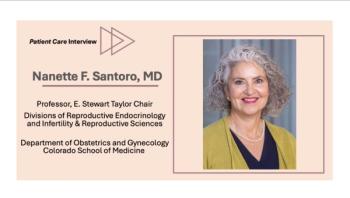
The nonhormonal neurokinin-3 receptor antagonist improved menopausal adiposity without appreciable impact on body weight or BMI, Santoro explained at 2025 ACOG meeting.
ACOG 2025: Pregnant patients may not want to discuss weight gain initially, so focus on overall perinatal health, and use that information to guide more conversation.
LeThenia Joy Baker, MD, explains why PPD is often overlooked compared to physical pregnancy conditions like gestational diabetes.
ACOG 2025: Dr Baker shares how language can help create a trusting space for patients to speak openly about postpartum depression.
ACOG 2025: Joy Baker, MD, called for stronger cross-specialty collaboration to address maternal mental health after birth.

The two areas where primary care physicians can contribute to improving women's health, according to Laurence Shields, MD.

Building trust with patients early on will help them feel comfortable discussing their symptoms and treatment preferences, says JoAnn Pinkerton, MD.
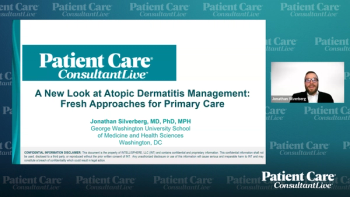
A panelist discusses how simplifying treatment regimens, using nonsteroidal options, and fostering collaboration between primary care and dermatology can improve patient adherence and outcomes while emphasizing the importance of careful consideration when transitioning to systemic treatments or biologics due to safety concerns and patient needs.
A panelist discusses how the ADORING trial for tapinarof demonstrated good efficacy and safety, but emphasizes that treatment choices for atopic dermatitis depend on patient needs, preferences, and the specific characteristics of their condition, with factors like speed of action, safety, and adherence playing key roles in decision-making.
A panelist discusses how the real-world use of crisaborole, roflumilast, and ruxolitinib for atopic dermatitis reveals differing tolerability and efficacy, with roflumilast standing out for its superior results and ease of use while ruxolitinib is limited by safety concerns for larger areas of the body.
The speaker discusses the challenges of treating patients with topical steroid withdrawal, emphasizing the need for careful steroid reintroduction and responsible use while also exploring newer nonsteroidal treatments for atopic dermatitis and the barriers to access due to high costs and limited comparative effectiveness data.
A panelist discusses how patients cycling through numerous topical treatments, often without success, signals the need for treatment escalation or specialist referral, while emphasizing the risks and proper use of topical corticosteroids and calcineurin inhibitors in managing chronic dermatological conditions.
A panelist discusses how structured assessment tools like the itch Numeric Rating Scale, combined with a flexible, patient-centered approach to topical therapies—including both traditional steroids and newer non-steroidal agents—can improve atopic dermatitis management in primary care by enhancing treatment tracking, patient education, and access to appropriate care.
A panelist discusses how diagnosing and assessing atopic dermatitis across diverse skin types in primary care requires visual familiarity, patient-reported outcomes like itch severity, and practical tools such as body surface area and Investigator’s Global Assessment, emphasizing that effective management depends on combining clinical observation with patient experience.
A panelist discusses how recognizing the diverse presentations and patient demographics of atopic dermatitis—especially adult-onset cases and common mimics like scabies—is essential for accurate diagnosis and management in primary care, with an emphasis on clinical assessment over biopsy and the importance of cultural competence in dermatologic evaluation.
A panelist discusses how a fresh approach to atopic dermatitis management in primary care emphasizes early recognition, appropriate use of new topical therapies, and collaboration with dermatologists to address the disease’s diverse presentations and chronic course.

An interview with Jeff Andrews, MD, FRCSC, of BD Life Sciences.
An interview with Jeff Andrews, MD, FRCSC, of BD Life Sciences.
An interview with Jeff Andrews, MD, FRCSC, of BD Life Sciences.