








































































































ATLANTA -- As the severe acute respiratory syndrome (SARS) epidemic moved round the world in 2002-03, clinicians tried a range of interventions against the coronavirus. Now it seems that they may have been futile, at best.

ATLANTA -- As the severe acute respiratory syndrome (SARS) epidemic moved round the world in 2002-03, clinicians tried a range of interventions against the coronavirus. Now it seems that they may have been futile, at best.
SPRINGFIELD, Ill. -- Americans' risk of dying from cancer continues to decrease, but the rate of new cancers for both sexes and for all races combined has not changed from 1992 to 2003, according to a report by the nation's leading cancer organizations.
SAN DIEGO -- Fatal encounters with stingrays like the one that killed "Crocodile Hunter" Steve Irwin this week are extremely rare, but minor injuries from the creatures are common.
ROCKVILLE, Md. -- The FDA has approved a fully implantable mechanical heart, but has limited the use to a subset of heart failure patients unlikely to live for more than a month without the device.
BEIJING -- A potentially dose-sparing avian influenza vaccine containing inactivated whole particles of the virulent H5N1 strain evoked good immune responses at low doses in early clinical trials, researchers here and in England reported.
CHICAGO -- Lactose-intolerant children should not avoid dairy products but consume as much as they can tolerate, according to a report issued today by the American Academy of Pediatrics.
Abstract: Rhinosinusitis affects millions of persons annually and has a marked impact on quality of life and work productivity. Chronic rhinosinusitis (CRS) is characterized by symptoms that last at least 12 weeks. The history and physical examination should include a search for underlying conditions, such as allergic or nonallergic rhinitis and nasal polyposis. An evaluation of underlying immunodeficiency is warranted in certain patients, particularly those with severe or difficult-to-treat disease or other recurrent infections. When radiologic evaluation is indicated, coronal sinus CT scanning is the procedure of choice. While antibiotics are indicated for bacte- rial rhinosinusitis, intranasal corticosteroids represent the mainstay of treatment for CRS and are particularly useful when polyp disease is present. Nasal irrigation with a saline solution can be a very beneficial adjunctive therapy. Depending on coexisting conditions, additional treatments may include antihistamines, leukotriene modifiers, and immunotherapy. (J Respir Dis. 2006;27(9):372-379)
Acute infection has been known to increase the risk of arterial cardiovascular events, but the effects of acute infections on venous thromboembolic disease have not been well established. Using the self- controlled case-series method, British researchers studied data obtained from general practitioners between 1987 and 2004 to investigate whether acute respiratory and urinary tract infections transiently increased the risk of initial incidents of deep venous thrombosis (DVT) in 7278 persons and pulmonary embolism (PE) in 3755.
Previous receipt of the pneumococcal vaccine is associated with improved survival, reduced risk of respiratory failure, and decreased length of stay among patients hospitalized with community-acquired pneumonia (CAP). This finding was reported by Fisman and associates, who evaluated data from 109 community and teaching hospitals.
A 62-year-old man presents with a violaceous, nonpruritic eruption that arose 2 weeks earlier on the hands and feet, including the palms and soles, and spread to the arms and legs (Figure 1). Over the past 3 to 4 weeks, he has had malaise, nonproductive cough, and a decline in mental status but no fever, headache, nausea, light-headedness, hemoptysis, or melena.
For as long as he could remember, a 27-year-old man had had a recurrent eruption on the palms and sides of the fingers. The rash was characterized by intense pruritus followed by the formation of small water blisters and increased perspiration that resolved with peeling of the skin. The dorsa of the hands were unaffected. Results of a potassium-hydroxide preparation and fungal culture of skin scrapings were negative for hyphae. The thyrotropin level was normal.
Hepatomegaly is detected during the routine physical examination of a healthy 40-year-old woman who is employed as a secretary. She has noticed some fullness in the right upper abdomen for many years, but it has not been accompanied by pain or GI symptoms.
A 62-year-old man presents with a violaceous, nonpruritic eruption that arose 2 weeks earlier on the hands and feet, including the palms and soles, and spread to the arms and legs.
Hepatomegaly is detected during the routine physical examination of a healthy 40-year-old woman. She has noticed some fullness in the right upper abdomen for many years, but it has not been accompanied by pain or GI symptoms.
Thanks to antibiotics, infectious diseases that were fatal less than 50 years ago are now eminently curable. But at what cost? Clostridium difficile colitis is one alarming side effect that is occuring more often--and with more severity--than you might think.
Pruritic eruptions on both arms of a 12-year-old who has played outdoors all summer; a rash on the hand of a teenage baseball player . . . might sports be responsible for these lesions?
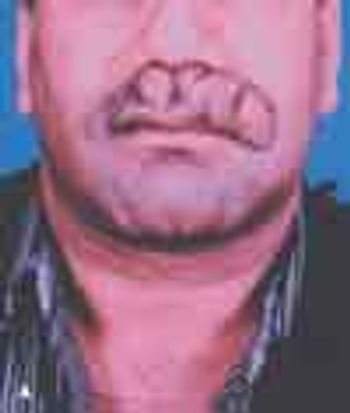
A 38-year-old man sought treatment for the intensely pruritic swellings that had arisen on his upper lip 2 weeks earlier. These sharply demarcated, tender, boggy, granulomatous pustular tumefactions are kerions.
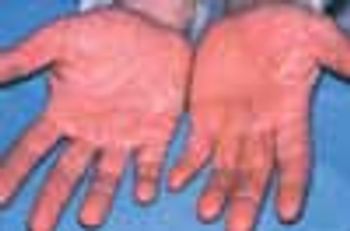
For as long as he could remember, a 27-year-old man had had a recurrent eruption on the palms and sides of the fingers. The rash was characterized by intense pruritus followed by the formation of small water blisters and increased perspiration that resolved with peeling of the skin. The dorsa of the hands were unaffected. Results of a potassium-hydroxide preparation and fungal culture of skin scrapings were negative for hyphae. The thyrotropin level was normal.
To what do you attribute symptoms of rash and fever in: a man with type 2 diabetes; a woman with systemic lupus erythematosus; a previously healthy girl.
Three case studies of patients with fever and rash challenge you to distinguish infectious from other causes and serious from non-threatening.
PARIS -- Women who opt for an elective cesarean have a threefold higher risk of mortality than those who choose vaginal delivery, according to investigators here.
NEW ORLEANS -- For some physicians and nurses the decision to depart this city permanently is due to post-Katrina losses of practices, homes, and patients, but others cite discouragement and defeat at the failure of leadership that permeates the community.
CAMBRIDGE, Mass. -- Patients and third-party payers are getting a fair amount of bang for their health-care bucks, calculated a Harvard economist, and colleagues.
NEW ORLEANS -- As the waters from Hurricane Katrina receded a year ago, they left a once-thriving medical-research establishment in shambles, much of it irretrievably lost.
WASHINGTON -- An empirical therapy used to battle the Spanish flu early in the 20th century may be a valuable addition if the 21st century avian flu turns into a pandemic, researchers here suggested.