
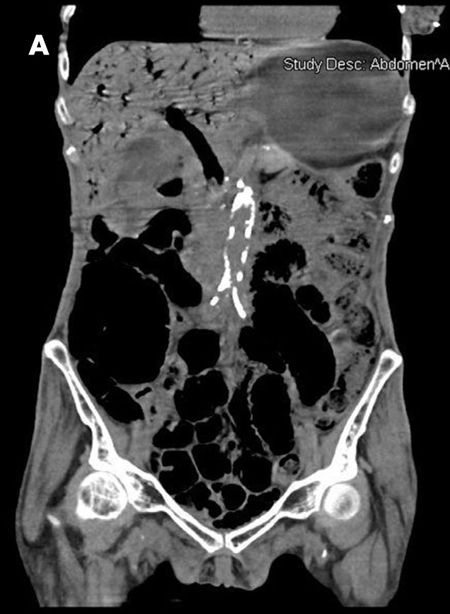






























































































































A 30-year-old man is admitted for profound, symptomatic anemia.
A 30-year-old man is admitted for profound, symptomatic anemia.
Confirming the presence of the H1N1 influenza virus in patients with suspected infection is critical to public health efforts to track, study, and contain the disease-and to the ability of clinicians to provide optimal management. Appropriate diagnostic testing is key to this process.
Not all patients in whom infection with the H1N1 influenza virus is suspected or confirmed need to be treated. Many patients with mild disease can forgo pharmacotherapy. In fact, in many cases, it may even be prudent to discourage such patients from coming into their health care provider's office, in the interest of infection control. However, all patients with severe disease and those considered at high risk for complications from seasonal influenza should be offered therapy with antiviral agents.
Before considering the infection control strategies recommended during the current H1N1 influenza pandemic, it is useful to review the transmission characteristics of influenza viruses-including H1N1-that form the basis for these strategies:
The ability to recognize cases of the new H1N1 flu and distinguish these from seasonal influenza and other respiratory illnesses is perhaps the overriding concern of primary care practitioners. Prompt and accurate identification of this entity is the key to both effective management of individual illness and effective public health measures.
Be alert for a potential dosing error when you prescribe oral-suspension oseltamivir (Tamiflu).
The first 2009 H1N1 influenza vaccine to become available will be a nasal spray that contains live attenuated virus, said CDC health officials.
On Sept 15, 2009, the FDA approved 4 vaccines against the H1N1 influenza virus. Distribution of the vaccine to about 90,000 sites across the United States will begin in mid October.
More than half of travelers to the developing world experience a health-related problem during their trip, with 8% requiring medical attention on their return because of persistent symptoms. The GeoSentinel database, a collaborative effort among 31 travel medicine clinics on 6 different continents, suggests that the most common diagnoses in these persons continue to be malaria (24%), dengue fever (6%), acute traveler’s diarrhea (4%), and typhoid fever (2%).
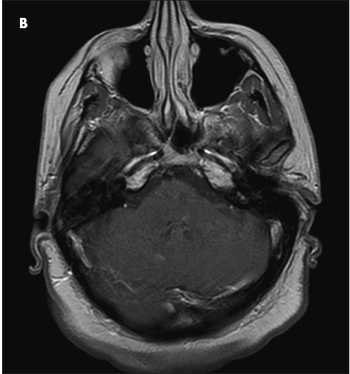
For a month, an obese 50-year-old woman with type 2 diabetes mellitus, hypercholesterolemia, and hypertension had blurry vision in both eyes. During this time, she also had ataxia and right-sided numbness. For the past 2 days, she had had horizontal, binocular diplopia with right gaze.
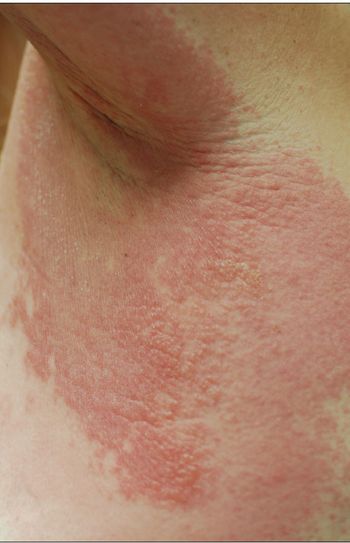
For 2 months, a 60-year-old man has had this pruritic eruption on his arms, legs, and trunk. It is itchy enough at times to interfere with his sleep. He has taken the same antihypertensive medication for more than a year.
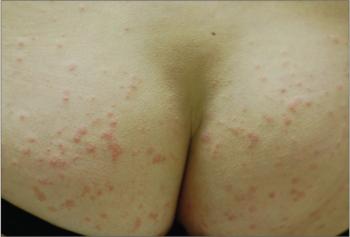
This pruritic eruption appeared on the arms, thighs, and buttocks of a 28-year-old woman after the uneventful delivery of her second child.
Hold your ground when the worried well come into your office this fall demanding prescriptions for Tamiflu and Relenza
As a reflection of the disproportionate impact that the swine flu is having on young children, the CDC’s gift shop in Atlanta is now selling a swine flu toy-a soft 7 inch model of the virus that can be used by adults to explain H1N1 infection to youngsters.
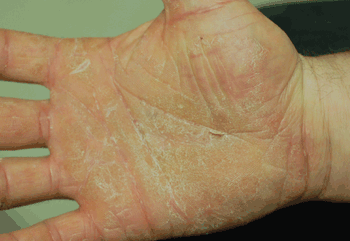
A 46-year-old dentist presents for evaluation of chronic hand dermatitis of 1 year’s duration. He has no other rashes. Standard patch testing was negative. Another physician prescribed a high-potency corticosteroid cream that controls the rash but does not clear it. The patient takes no other medications.
When you encounter unexplained seizures or mental status changes in children who have influenza-like illness, send respiratory specimens for diagnostic testing and promptly start empirical antiviral therapy, especially in hospitalized patients.
Reserve antivirals for adults and children over age 1 who have severe novel H1N1 influenza or who are at high risk for complications.
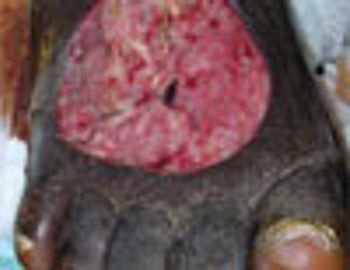
This painful, purulent, malodorous, 5 x 5-cm ulcer developed a few days after the 71-year-old patient had struck his foot against a radiator. For the past 24 hours, he had subjective fevers and chills. He denied recent travel and saltwater or freshwater exposure. He had chronic lymphedema and admitted to drinking alcohol socially.
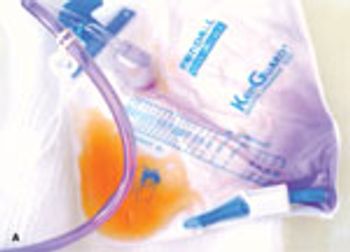
The purple-stained urine bags and tubing of 2 elderly patients are shown here. Neither patient received urine-discoloring medications.
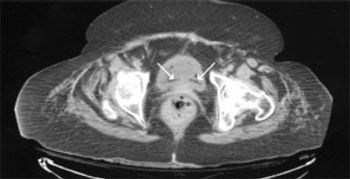
A 77-year-old woman with hypertension, diabetes mellitus with neuropathy and nephropathy, coronary artery disease, and previous stroke with residual right hemiparesis was hospitalized because of abdominal pain, nausea, and vomiting of sudden onset. She also reported subjective fever, dysuria, and foul-smelling urine.

At 1 week postpartum, a 32-year-old woman presents with an itchy rash of sudden onset. Famciclovir, 500 mg bid, is prescribed, but the rash persists.

This pruritic rash developed in a 43-year-old woman who had undergone a lumpectomy and lymph node dissection for breast cancer. She completed radiation therapy and chemotherapy 3 weeks ago. The rash has been present for 5 days. Levofloxacin was started 1 day ago.
A 33-year-old woman presents with arm and leg weakness of about 2 months’ duration.
At least 2 double-blind, randomized, placebo-controlled trials have shown that minocycline is superior to placebo for relief of signs and symptoms of RA.
In 2000, the World Allergy Organization (WAO) published a consensus definition of anaphylaxis as a severe, life-threatening generalized or systemic hypersensitivity reaction. The reaction is caused by the release of bioactive mediators from mast cells and basophils.