

























































































































Your daily dose of the clinical news you may have missed.


Investigational Psychedelic RE104 for Postpartum Depression Delivers Positive Phase 2 Results: Reunion Neuroscience Update
Your daily dose of the clinical news you may have missed.
Monu Khanna, MD, discusses the benefits of behavioral strategies, including yoga, breathwork, and dancing, in reducing cardiovascular disease risk in patients with obesity.

Maternal depression significantly disrupts parenting behaviors, impacting child development and emotional bonding, according to an updated international literature review.

A single dose of BPL-003 was associated with improved MADRS scores as early as day 2 that were durable through week 8; phase 3 planning is anticipated.

AUD affects 15 million Americans, with men nearly 2 times more vulnerable to the disease vs women. Are you tracking signs and symptoms in your patients?

Authors say their findings support the accumulating evidence that late-life mood disorders may be a prodromal manifestation of dementia vs a risk factor alone.
Your daily dose of the clinical news you may have missed.

ACOG 2025: Joy Baker, MD, discusses the urgent need to prioritize postpartum depression screening, normalize mental health in prenatal care, and strengthen continuity between OB-GYN and primary care.

The novel rapid-acting psychedelic agent produced antidepressant effects within 24 hours after the first infusion, with a -18.5 point change in MADRS from baseline.

Youth depression is often diagnosed during crisis events, underscoring the need for primary care education and enhanced collaborative care resources.

ACOG 2025: Elizabeth Mollard, PhD, discusses her research on how Medicaid policies influence postpartum depression screening rates.

The model demonstrated 70.63% accuracy for predicting depression, a common comorbidity seen in COPD and one that increases risk for negative outcomes.

New data from UNITE study suggest fremanezumab was effective in alleviating migraine and comorbid MDD in patients with both conditions.
Approximately 40% of adults with chronic pain have comorbid anxiety and/or depression, underscoring the importance of routine screening in this population.

Suicide prevention falls squarely in the purview of primary care practitioners, says family physician Teresa Lovins, MD. She reviews an intervention with remarkable results.
Your daily dose of the clinical news you may have missed.
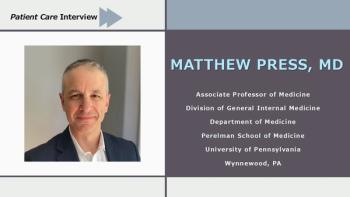
ACP 2025: Dr Press discusses how the Penn Integrated Care model equips primary care physicians to manage mental health conditions more effectively while reducing burnout.
ACP 2025: Discover how the collaborative care model supports mental health in primary care through team-based care, symptom tracking, and psychiatric consultation—boosting outcomes and reducing burden on clinicians.

More than one-third of study participants with TRD had failed to get relief from 4 or more antidepressants, calling treatment experiences a "trial and error" process.

Patients with depression from high-wealth areas were 1.62 times more likely in primary care and 1.67 times more likely in psychiatry to use telehealth.

Comorbid conditions accrued at a rate 30% faster among adults with depression than in those without the disorder over a 7-year follow-up period.

AV-101 is an orally bioavailable small molecule NMDA receptor antagonist with antinociceptive effects similar to gabapentin but with more a more favorable safety profile.

People with MDD demonstrated a preference for carbohydrate-rich foods and reduced reward from fat- and protein-rich foods, according to new research.

GH001, an inhalable 5-MeO-DMT therapy, led to a -15.5 MADRS score reduction by day 8 in patients with treatment-resistant depression.
Your daily dose of the clinical news you may have missed.