






















































































































Pulmonary vein ablation has not gained recognition as a "cure" for atrial fibrillation so a new approach would be welcomed.
Pulmonary vein ablation has not gained recognition as a "cure" for atrial fibrillation so a new approach would be welcomed.
Patients with mechanical heart valves are not candidates for dabigatran; excess bleeding curtailed the first study to test it.
Reassess rate vs rhythym control, appropriate anticoagulation therapy and potential drug-drug interactions.
Smoking can increase cholesterol, triglycerides, and LDL while decreasing HDL.
Bleeding risk is increased in patients receiving oral anticoagulation and concomitant aspirin.
This agent has a large number of drug-drug and drug-food interactions, and there is a need for increased INR monitoring.
Oral apixaban for acute VTE was superior to enoxaparin followed by warfarin.
Syncope accompanied by a sensation of coldness preceded a fall in this 67-year-old woman. She had a similar experience 6 months earlier.
Pulmonary embolism was the diagnosis in these 3 women, each of whom presented with positional right flank pain.
Novel anticoagulants have a half life much shorter than warfarin and so adherence and medication error are significant issues.
Oral anticoagulation with rivaroxaban must continue while initiating a switch to warfarin. Duration of overlap will be variable.
Direct thrombin inhibitor dabigatran or factor Xa inhibitor apixaban or rivaroxaban? All are good choices for specific patient types.

Adult-onset psoriasis is uncommon without a precipitating factor. In this patient’s case, an oral beta-blocker precipitated the psoriasis.
New oral anticoagulants require careful initiation and follow-up. A new guide is offered by the European Heart Rhythm Association.
HAS-BLED, HEMORRHAGES, OBRI: Risk calculators to assess potential for bleeding in AF patients before anticoagulation.
Periprocedural dabigatran increases the risk of bleeding and thromboembolic complications compared with warfarin during radiofrequency ablation of AF.
The CHA2DS2-VASc score improves risk determination by incorporating age 65 to 74 years, female sex, and history of vascular disease.
Aldosterone antagonists, eg, eplerenone, decrease adverse cardiovascular outcomes in patients with HF and AF.
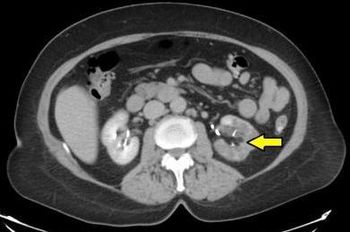
Acute renal infarction most often causes flank pain associated with nausea, vomiting, abdominal pain and, less frequently, fever.
Colesevelam helps reduce serum glucose levels and also lowers LDL-C in patients with type 2 diabetes. Bromocriptine reduces the relative risk of cardiovascular events in patients with type 2 diabetes.
CD4+ count and viral load were complementary and were independently associated with increased incidence of AF.
Interruption of anticoagulation with rivaroxaban or warfarin should be bridged with an agent such as low-molecular weight heparin.
Could the left atrial appendage closure device, known as the Watchman, become an alternative to oral anticoagulation for select patients? Here, more on the 2 trials that have introduced the possibility.
Here: how omega-3 fatty acids may help reduce the risk of atrial fibrillation (AF) in postcardiac surgery patients; how incident HF can help predict adverse outcomes in patients with AF; and why an old gout drug may help reduce the risk of AF in patients with heart failure.
Female CV mortality lags behind male mortality; lifetime risk assessment, not 10-year risk, is a better estimation tool for women