
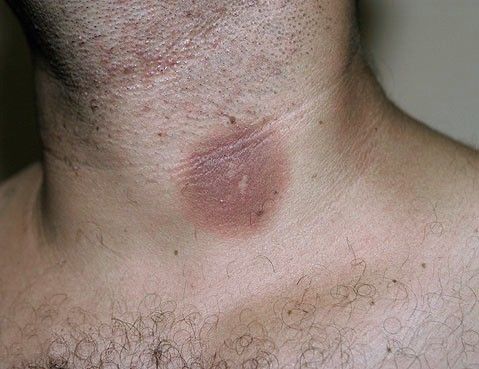
































































































































































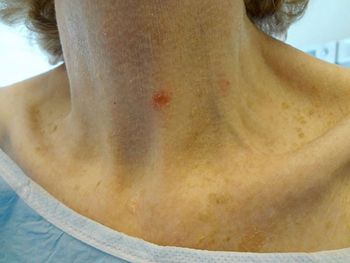
A 76-year-old woman seeks your attention for an asymptomatic “red spot” on her neck. What does this look like to you?
A 76-year-old woman seeks your attention for an asymptomatic “red spot” on her neck. What does this look like to you?

Many medical disorders occur more frequently in the cold, dry weather of the winter season. Take this week’s photo quiz to test your knowledge of these hazardous conditions.
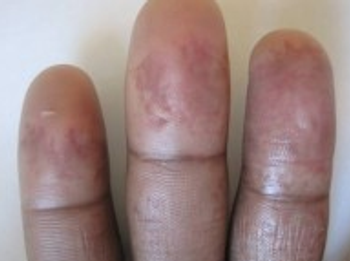
This teen has had violaceous papules, petechiae, and healing ulcerations on the distal digits of both hands and feet for about a month this winter as well as intermittent shortness of breath since she moved to the northeast from the Caribbean. What's in your differential?
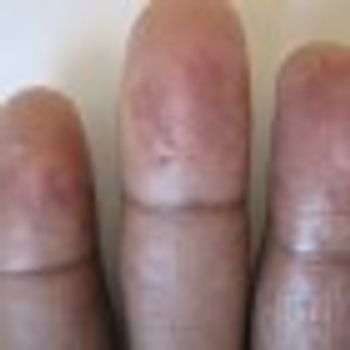
The young female presented with a 1-month history of violaceous papules, petechiae, and healing ulcerations on the distal digits of both hands and feet.
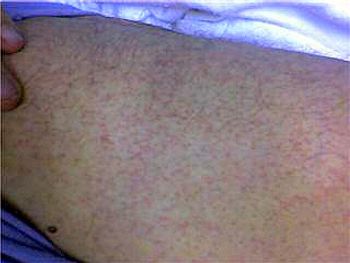
Recent travel to the Caribbean is the key clue that led to the diagnosis of dengue fever, which caused maculopapular rash, fever, headaches, and body aches.
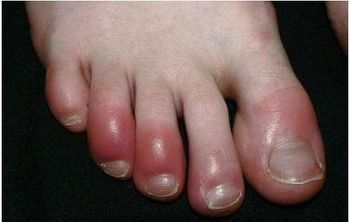
Here, 3 slide shows that were the most popular of our weekly offerings in 2013. Have a go at the quiz questions and see how well you do.
Small and nondescript, subungual splinter hemorrhages should prompt further investigation.
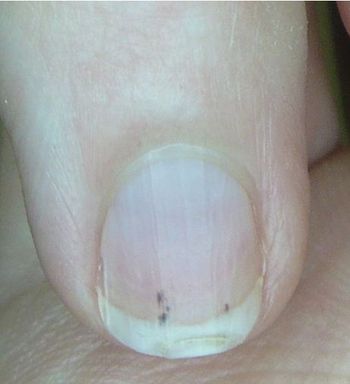
Thin dark lines beneath the fingernails are the only physical findings of note in a middle-aged man who presents with cough, fevers, and arthralgias.
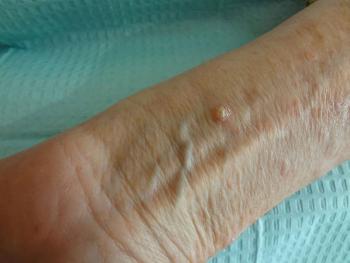
This mobile tender nodule was discovered on the left wrist of a 60-year-old woman with a history of many non-melanoma skin cancers. What’s your best diagnostic guess?
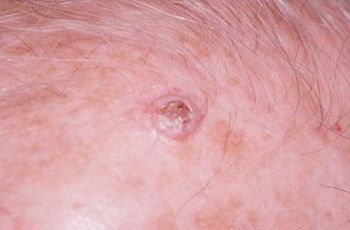
This lesion was treated in the primary care physician’s office. What treatment approach would you opt for?
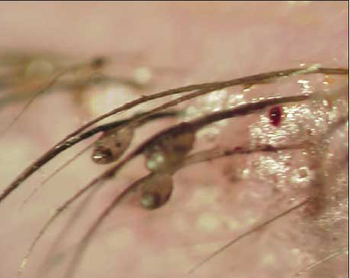
Blepharitis caused by lice; lung cancer in former smokers; infection in chronic kidney disease. . . . here: 5 questions on 5 different disorders to challenge you again this week.
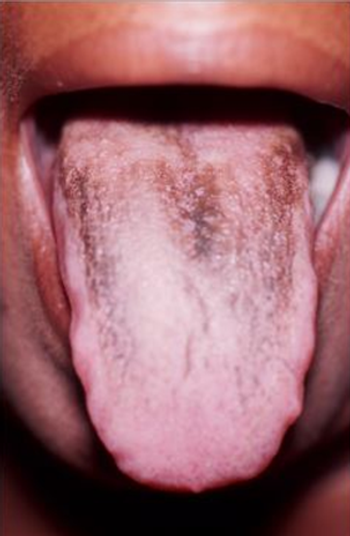
After a “swig” of Kaopectate, this patient noticed tongue discoloration. Is this coincidental, or is there a clinical connection?
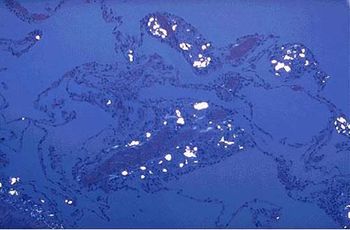
The topics this week range from superficial to visceral, and from head to spleen. See if you can answer all 5 questions.
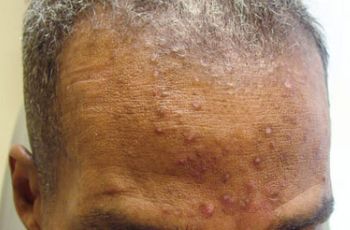
Here a close-up look at fungal, eosinophilic pustular, and steroid-induced folliculitis.
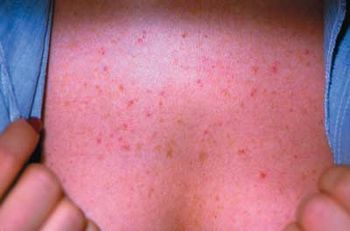
Here: a close-up look at gram-positive and -negative cases of folliculitis.
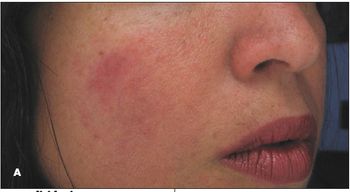
Bites from various bugs can resemble one another and cause symptoms similar to those of a variety of disorders. Test your knowledge in this week's photo quiz.
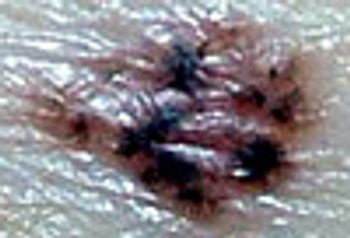
Basal cell carcinoma often has a distinct appearance: a waxy bump that is pearly or translucent, with a rolled border is classic. But its appearance can raise suspicion for other conditions-mainly melanoma. Here are some examples of typical and atypical BCCs.
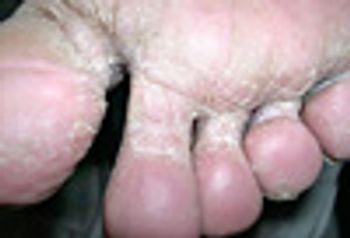
A wide range of disorders show up in the feet, and patients often turn to their primary care physician to find the diagnosis. This week's photo quiz offers several presentations to test your knowledge.
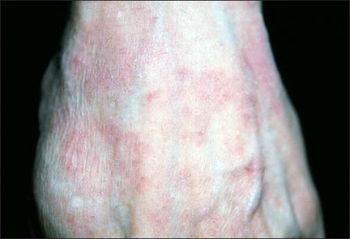
What strategy will you choose to help cure this woman’s local rash?
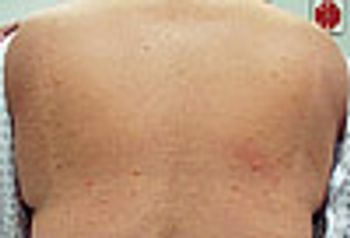
How much do you know about cephalic tetanus? Perioperative hypotension? PCOS? Take this week’s test and see if you can answer these 5 questions.

6 sexually transmitted infections-6 decisions. Test your skills.
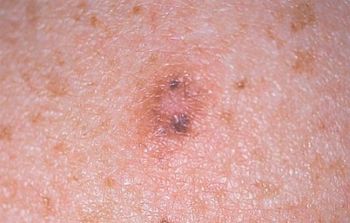
Do you suspect this hard nodule to be a melanoma?
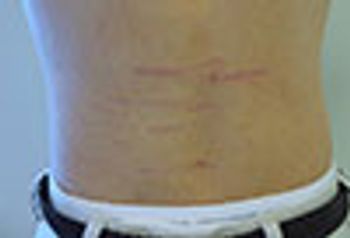
Has this teen been abused? Cast your votes and see if you’ve answered this and the 4 other questions in this week’s quiz correctly.
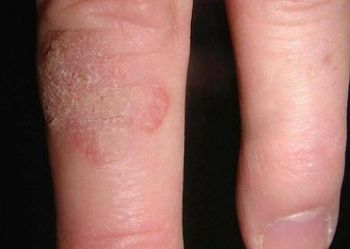
The differential diagnosis consists of psoriasis, wart, eczema, squamous cell carcinoma in situ, and prurigo nodularis. What’s your diagnosis?
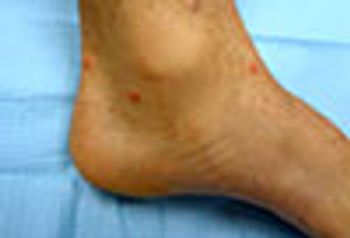
Multiple itchy red bumps on a man’s ankles; relative contraindications to lumbar puncture; stroke in an addict. . . 5 more questions for you to test the breadth of your clinical knowledge.